

 By Dr. Abhi Singh
 If you’re sorting this out near Prospect Road Dental Surgery in Armadale, this guide walks through what usually happens and what only a check-up can decide.
If you’re looking for an Armadale dental clinic, there’s a fair chance something has been bothering you — or you’ve realised it’s been longer than planned since your last check-up. You might also feel nervous about what the dentist will find, especially if a tooth has started aching or you’ve put off the visit for a while.
That’s understandable. A useful first appointment isn’t about being judged. It’s about working out what’s happening, what needs attention and what can reasonably wait. This guide explains what you can expect, how to prepare and when a dental problem deserves an earlier appointment.
If you are looking for a dentist in Armadale
People search for a local dentist for all sorts of reasons. Sometimes it’s a routine check-up. Sometimes there’s a chipped tooth, bleeding from the gums, jaw tension or a child who needs their first visit. You may simply want a practice close to home so regular care is easier to keep up with.
For people in Armadale and nearby areas such as Kelmscott, Gosnells and Byford, location matters because dental care rarely ends with one conversation. You may need an examination, a clean, monitoring over time or another appointment to complete treatment.
Healthdirect’s overview of dental care explains that regular visits can help detect problems early and covers the role of everyday brushing, flossing and professional dental care. Your own visit still needs to be based on your mouth, medical history and symptoms.
If you’re nervous or overdue
Tell the receptionist or dentist that you’re anxious. You don’t need a polished explanation; saying you’ve been putting the appointment off is enough. That information helps the dentist pace the discussion, explain each stage and check how you’re managing before moving on.
An overdue visit doesn’t automatically mean you’ll need extensive treatment. It does mean the dentist will need to examine you before giving a useful answer. They may ask:
- What prompted you to book now?
- Are you feeling discomfort, sensitivity or pressure?
- Have you noticed bleeding, swelling or a change in your bite?
- When was your last dental visit or set of X-rays?
- Do you have medical conditions, allergies or medicines that affect care?
Be direct, even if the symptom seems minor. A tooth that only hurts when you bite tells the dentist something different from a constant throb or sensitivity that lingers after a cold drink.
Prospect Road Dental Surgery provides general dentistry, preventive care and family dental care in Armadale. Its public team profiles also include the clinicians’ AHPRA registration numbers, so you can check who may be involved in your care.
What a regular check-up covers
A check-up is more than a quick look for holes. The dentist usually begins by asking what you’ve noticed and whether anything has changed since your last appointment. They’ll then assess your teeth, gums and other areas of your mouth. Your bite, existing fillings and signs of tooth wear may also need attention.
What to expect at a check-up
| Part of visit | What it means for you | Good question to ask |
|---|---|---|
| Exam | A look at teeth, gums and bite | What are you seeing today? |
| Clean | Remove buildup you cannot get at home | How often should I book? |
| Plan | Only what you need, explained first | What can wait versus what should not? |
Not every visit follows exactly the same order. If you arrive with a painful tooth, the dentist may focus first on that problem rather than completing every part of a routine appointment. X-rays may be considered when the dentist needs information that isn’t visible during the examination. Whether they’re appropriate depends on your symptoms, dental history and previous images.
What the clean may involve
Plaque is soft enough to remove with effective brushing and cleaning between your teeth. Once deposits harden, they can’t usually be removed with a toothbrush at home. A professional clean may involve removing that buildup and polishing the tooth surfaces.
You may notice vibration, water or pressure during the clean. Areas with inflammation or sensitivity can feel more tender, so speak up if you need a pause. The clinician can explain what they’re doing and which areas need more attention at home.
A clean isn’t automatically the whole answer for bleeding gums. The dentist needs to look at where the bleeding occurs, how much buildup is present and whether there are signs of deeper gum problems. That distinction affects what care and follow-up may be suitable.
Questions worth asking before you leave
Try to leave with a clear picture of priorities. Useful questions include:
- Did you find active problems or areas you’re only watching?
- Which treatment needs attention first, and why?
- What could happen if I wait?
- Are there choices, and what are the trade-offs?
- What should I change in my home routine?
- When should this area be checked again?
If an explanation doesn’t make sense, ask to hear it another way. It’s your mouth. You should understand why a recommendation has been made before deciding what to do.
Common treatments explained simply

Hearing that a tooth needs treatment can make your mind jump several steps ahead. Slow the conversation down. The right treatment depends on what the dentist can see, how much tooth structure is affected, your symptoms and the condition of the surrounding gum and bone.
Fillings and damaged teeth
A filling may be considered when decay or a small area of damage can be treated while keeping the remaining tooth. The dentist removes the affected material, prepares the area and places a restorative material. What you feel afterwards varies. Some teeth are temporarily sensitive, particularly if the area treated was deep or close to the nerve.
A filling can’t solve every damaged tooth. A large fracture, an irritated or infected nerve, or limited remaining tooth structure may require a different discussion. An examination — and sometimes an X-ray — is needed to tell the difference.
If you grind or clench, tooth wear and jaw symptoms may also need to be assessed. You can read more about the practice’s approach to general dentistry, but online information can’t establish the cause of your symptoms.
Hygiene and gum care
Bleeding while brushing is worth mentioning rather than avoiding. Brushing less because the gums bleed can allow more plaque to remain. The dentist or clinician can show you where buildup is collecting and suggest a brushing or interdental-cleaning technique suited to the spaces between your teeth.
Early gum inflammation and more established gum disease don’t require identical care. Measurements around the teeth, the amount of buildup and changes in the supporting tissues help determine what comes next. Some people need routine cleaning and home-care changes. Others need closer assessment and more involved gum treatment.
When the conversation goes beyond a filling
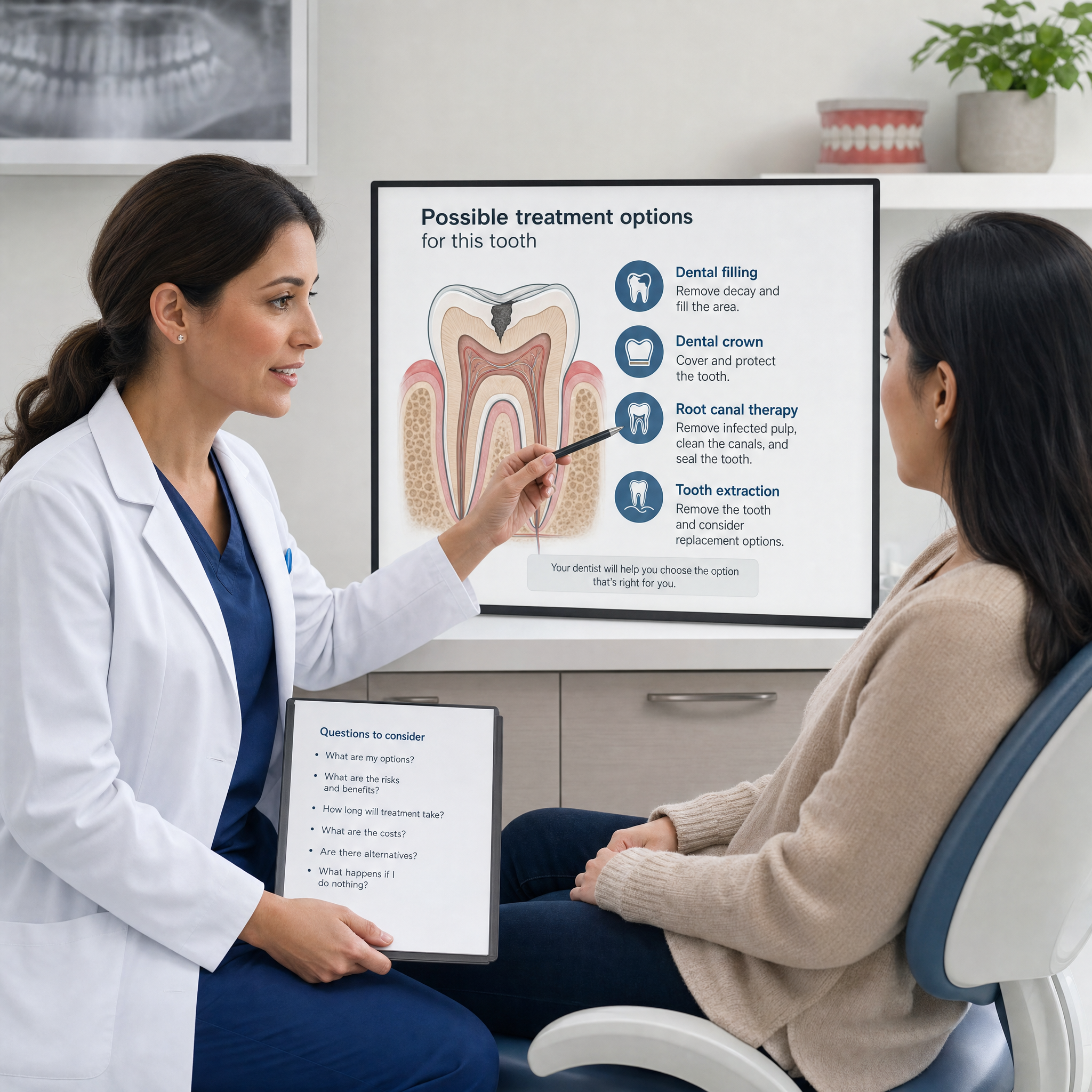
If a tooth is badly broken, missing or affected below the surface, the dentist may discuss more than one path. That doesn’t mean you need to choose during the first conversation. Ask what each option involves, how many visits may be needed, what maintenance is expected and what risks apply to your circumstances.
You may also have reached this guide through information pages such as Cosmetic Dentistry – Camillo, Cosmetic Dentistry – Brookdale or Dental Implants Landing. Those pages can help you form questions, but they can’t confirm that a procedure suits you. Cosmetic and implant-related decisions require an examination, discussion of alternatives and a clear explanation of material risks.
Any surgical or invasive procedure carries risks. Before proceeding, you should seek a second opinion from an appropriately qualified health practitioner.
How to prepare for your visit
You don’t need to do anything elaborate before a dental appointment. A few details, written down if necessary, can make the conversation much more useful.
What to bring
Bring identification and any information the practice requested when you booked. If you have recent dental X-rays or records from another clinic, ask whether they should be transferred before the appointment. Records can provide context, although the dentist may still need current images or further assessment.
Make a list of your medicines, including the dose if you know it. Include non-prescription products and supplements. Also tell the dentist about allergies, pregnancy, recent hospital care and relevant medical conditions. Don’t stop prescribed medicine for a dental appointment unless the prescriber or treating clinician has instructed you to do so.
Describe the problem in your own words
Before you arrive, note:
- Where you feel the symptom
- When it began
- What triggers it
- How long it lasts
- Whether it wakes you or affects eating
- Any swelling, unusual taste, fever or injury
- What you’ve taken or tried so far
You’re not expected to diagnose yourself. Details about timing and triggers are more helpful than trying to name the condition.
Ask about the plan and costs
If treatment is proposed, ask which parts are urgent and which can be scheduled later. You can also request an explanation of expected fees before agreeing to proceed. The amount can vary with the tooth involved, the findings and the treatment selected, so a website or phone conversation may not provide the final figure.
New visitors can review the terms provided for new patients and contact Prospect Road Dental Surgery if they need to clarify appointment arrangements beforehand.
When to book sooner
A routine booking may be appropriate when you have no active problem and simply need an examination. Pain, swelling or a damaged tooth changes the timing. These symptoms don’t tell you the diagnosis by themselves, but they’re reasons to call and describe what’s happening.
Toothache or strong sensitivity
Book sooner if discomfort is getting worse, lasts after the trigger is gone, wakes you at night or makes biting difficult. Pain can come from decay, a crack, an inflamed nerve, gum problems or several other causes. Only an assessment can sort them out.
Don’t place aspirin or another medicine directly against the tooth or gum. Healthdirect’s dental care guidance advises seeking dental care for tooth and mouth problems and explains when urgent medical attention may be needed.
Swelling, fever or trouble swallowing
Swelling around a tooth, the gum, jaw or face needs prompt dental advice. If swelling is spreading, you feel very unwell, or you have trouble breathing or swallowing, seek urgent medical care rather than waiting for a routine dental appointment.
When you call, say where the swelling is, when it started and whether it’s increasing. Mention fever, difficulty opening your mouth, a bad taste or any recent dental treatment. Clear details help the clinic work out the appropriate next step.
A broken or knocked tooth
Call after a tooth breaks, even if it isn’t very sore. Sharp edges can irritate your tongue or cheek, and damage may extend further than you can see. Keep any broken piece if you can find it, avoid chewing on that side and tell the clinic whether the injury involved a fall or blow.
A knocked-out adult tooth is time-sensitive. Handle it by the crown rather than the root and seek immediate dental advice. A baby tooth shouldn’t be put back into its socket because that can affect the developing adult tooth.
Frequently Asked Questions
What happens at my first visit?
The dentist will usually begin with your concern, health history and dental history, then examine your mouth. The appointment may include a clean or X-rays, but that depends on what you need and the time available. If you have an urgent problem, the first goal may be diagnosis and short-term management, with other care arranged later.
Will I be judged for not seeing a dentist for years?
The useful question isn’t why you waited; it’s what your mouth needs now. Tell the dentist if nerves, cost concerns, previous experiences or competing responsibilities kept you away. That context helps shape a realistic plan. You can also ask to address the most pressing issue first instead of discussing everything at once.
When should children start dental visits?
Children can benefit from early dental visits so their teeth, gums, development and home routine can be checked. If your child has tooth discomfort, swelling, an injury, unusual spots or feeding and brushing difficulties, don’t wait for a routine milestone. Book an assessment and explain the symptom when you call.
For a first visit, keep your description simple: the dentist will count and check their teeth and answer questions. Avoid promising exactly what will happen, because the appointment may need to change based on what the dentist finds and how your child manages on the day.
Can I ask about payment before agreeing to treatment?
Yes. Ask for the proposed treatment, likely fees and what is included before deciding. If there are several stages, ask which fee applies to each stage and whether the estimate could change after further findings. You can also ask for the relevant treatment details to discuss with your health fund, if you have one. The clinic can explain its fees, but only your fund can confirm what it may pay under your policy.
Do I have to agree to treatment at the check-up?
No. Apart from an immediate situation requiring urgent decisions, you can take time to understand the recommendation, alternatives, expected appointments, costs and risks. Ask what may happen if you delay and whether any part needs earlier attention. If you remain unsure about invasive treatment, you can seek another professional opinion.
How often should I have a check-up?
There isn’t one interval that suits every person. Your dentist may consider your decay history, gum health, medicines, dry mouth, home care and any areas being monitored. Ask why a particular recall period is recommended for you rather than relying on a fixed timetable.
Can the clinic tell me what’s wrong over the phone?
The team can listen to your symptoms and help determine how quickly you should be seen, but they generally can’t diagnose a tooth without examining it. Describe pain, swelling, injury and other changes clearly. If your symptoms worsen before the appointment, call again or seek urgent care where appropriate.
This information is general and doesn’t replace individual dental advice. Consult a dentist about symptoms, treatment choices and risks relevant to your own circumstances.
 Cosmetic Dentistry
 General Dentistry
 Restorative Dentistry
 Children’s Dentistry
 Laser Dentistry
 Orthodontics