

 By Dr. Abhi Singh
 If you’re sorting this out near Prospect Road Dental Surgery in Armadale, this guide walks through what usually happens and what only a check-up can decide.
You may know you need dental care, yet the cost feels hard to fit into your budget. If you’re already dealing with tooth pain or a long treatment estimate, choosing how to pay can feel like another problem on top of the dental issue.
A personal loan is one possible way to fund dental work, but it isn’t automatically the right or least costly option for you. The sensible starting point is to understand what treatment is proposed, why it has been recommended and how much it is expected to cost. Only then can you compare payment choices on equal terms.
Prospect Road Dental Surgery can examine your dental needs and provide an individual treatment estimate in Armadale. A licensed credit provider, not the dental practice, decides whether you qualify for a loan and what rates, fees and conditions apply.
Don’t put off an assessment while you arrange finance if you have strong or worsening pain, facial or gum swelling, dental trauma, uncontrolled bleeding, difficulty swallowing or another symptom that concerns you. Contact a dentist promptly; severe or rapidly worsening symptoms may need urgent attention.
How does a personal loan for dental work work?
With a personal loan, a lender approves an amount that you repay over an agreed period. Repayments usually include interest, and the contract may also include establishment, account, late-payment or early-repayment fees.
The two broad types are:
- Unsecured personal loans, which don’t require you to offer an asset as security. Eligibility, rates and limits still depend on the lender’s assessment.
- Secured personal loans, which are tied to an asset. If repayments aren’t made, the consequences can involve that asset, so the contract deserves particularly careful attention.
Neither type suits every person. A lower advertised rate doesn’t tell you the full cost, and approval alone doesn’t mean the repayments will fit your circumstances.
What usually happens first
A practical sequence looks like this:
- Have the dental problem examined.
- Ask for a written treatment plan and individual estimate.
- Clarify what is clinically pressing, what may be scheduled later and what alternatives are reasonable.
- Check savings, eligible health fund benefits and other payment methods before deciding how much you may need to borrow.
- Compare credit contracts using the total amount repayable, not just the advertised rate or weekly figure.
- Apply directly with the lender and read the proposed contract before accepting it.
- Proceed only when you understand both the dental plan and the repayment commitment.
Approval amounts, interest rates, comparison rates, fees and repayment terms vary between lenders and applicants. Your income, expenses, credit history and other commitments may affect the lender’s decision. The dental team can explain your proposed care, but it can’t decide whether a credit product is suitable for you.
What should you check before accepting a dental loan?
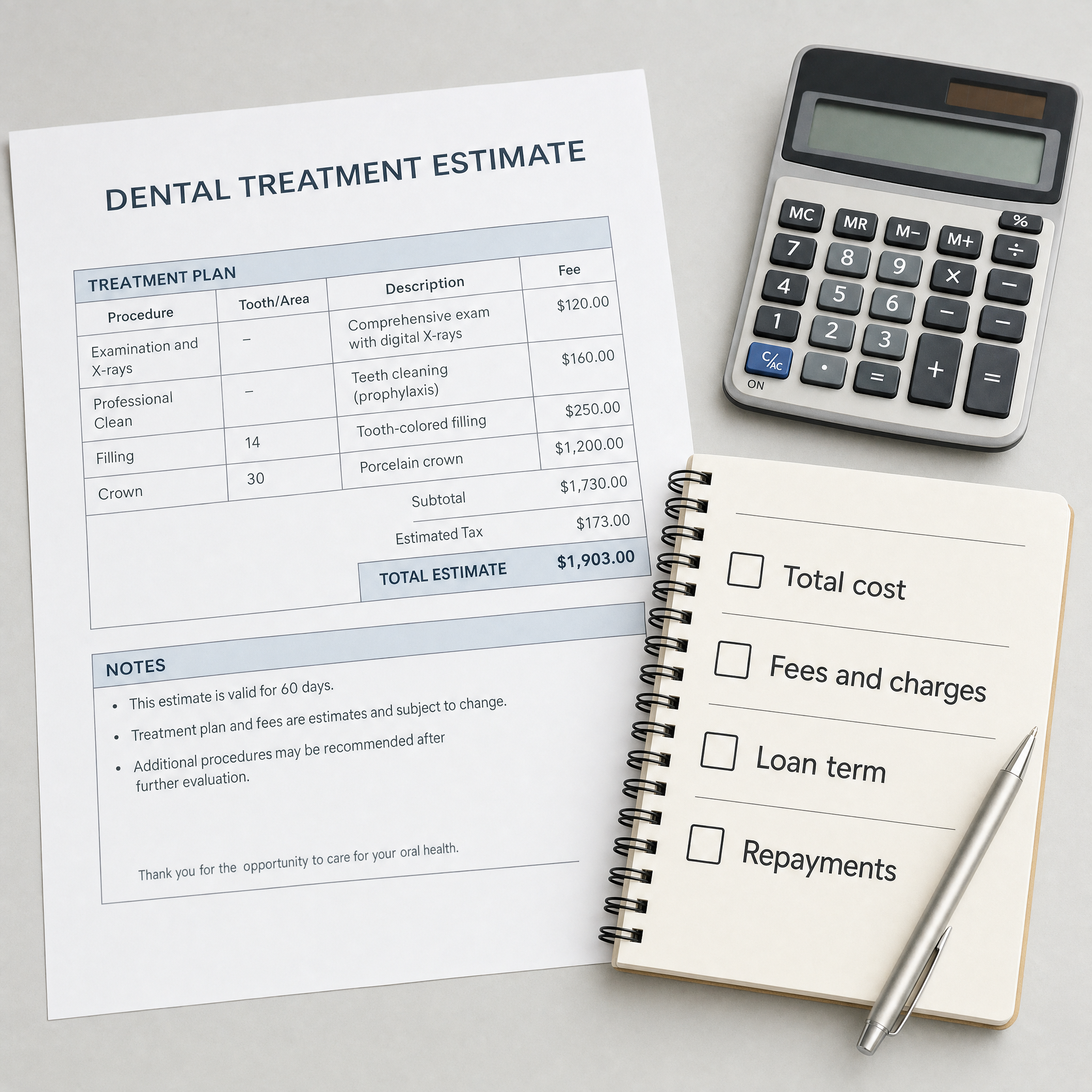
A repayment can look manageable when it’s shown as a small weekly amount. Stretch that amount over several years, though, and the interest and fees may make the total much higher than the original dental estimate.
Start with the total amount repayable. Then work backwards to see what creates that figure.
Personal loan checklist: rate, fees, term, repayments and total amount repayable
| Item to check | What to look for | Why it matters |
|---|---|---|
| Loan amount | The exact amount being borrowed | Borrowing more than the written estimate increases the debt and may increase interest paid |
| Interest rate | Whether it is fixed or variable and how it is calculated | A variable rate may change during the loan term |
| Comparison rate | The rate shown with certain fees included | It may help compare products, but it won’t capture every possible cost or your exact circumstances |
| Fees | Establishment, account, late-payment and other charges | Several smaller fees can materially increase the total cost |
| Loan term | The number of months or years | A longer term may reduce each repayment while increasing the total interest paid |
| Repayment schedule | Amount, frequency and due dates | Check that the timing works with your regular income and other bills |
| Early repayment | Extra-payment rules and possible charges | Conditions can affect your ability to finish the loan sooner |
| Total amount repayable | Principal, expected interest and included fees | This is a clearer measure of cost than the weekly repayment alone |
Ask what happens if a payment is late or your circumstances change. It’s worth testing the repayment against a less convenient month: an unexpected bill, fewer work hours or another household expense. If that would leave you short for rent, food, utilities or existing debts, pause before accepting the contract.
Your treatment plan can sometimes change after treatment starts. For example, the full condition of a tooth may not be known until damaged material is removed. That doesn’t mean you should borrow extra automatically. Ask the dentist what changes are reasonably possible, how you would be told about them and whether further consent and a revised estimate would be provided.
Read the credit contract itself, including the conditions beneath any headline offer. Don’t rush because an advertisement focuses on rapid approval or a limited decision window. If the fees, calculations or consequences aren’t clear, ask the lender for an explanation and consider independent financial guidance before signing.
What information should you ask your dentist for first?
A useful estimate starts with an examination, not an online price or another person’s bill. Your dentist needs to assess the tooth or area involved, your oral health and any information that may affect the proposed care. Healthdirect also places regular dental check-ups within routine oral healthcare; its Healthdirect dental care guidance gives broader Australian context about looking after your teeth and seeking dental care.
Ask for a written plan that explains:
- what care is being proposed and its clinical purpose;
- which parts need attention sooner;
- whether any part may be scheduled in stages based on your oral health;
- reasonable alternatives and what each involves;
- the likely number of appointments;
- what is included in the estimate; and
- what may cause the plan or estimate to change.
A written plan gives you something concrete to compare with your health fund information and any lender’s contract. It also helps prevent two different questions from becoming tangled together: “Do I understand the proposed care?” and “How will I pay for it?”
Treatment needs can differ even when two people describe the same symptom. X-rays or other assessment may also be required before a dentist can determine the suitable options. An online example can help you form questions, but it can’t produce an accurate personal quote.
The team at Prospect Road Dental Surgery can discuss confirmed general dentistry, family dental care, preventive care and wisdom teeth consultation pathways. If your proposed plan relates to repairing damaged teeth, you can also read about restorative dentistry options in Armadale. For general background on how implant estimates may be structured, see understanding dental implant costs and this dental implant cost breakdown. An examination is still needed to find out what applies to you.
Could health fund benefits or staged care reduce what you need to borrow?
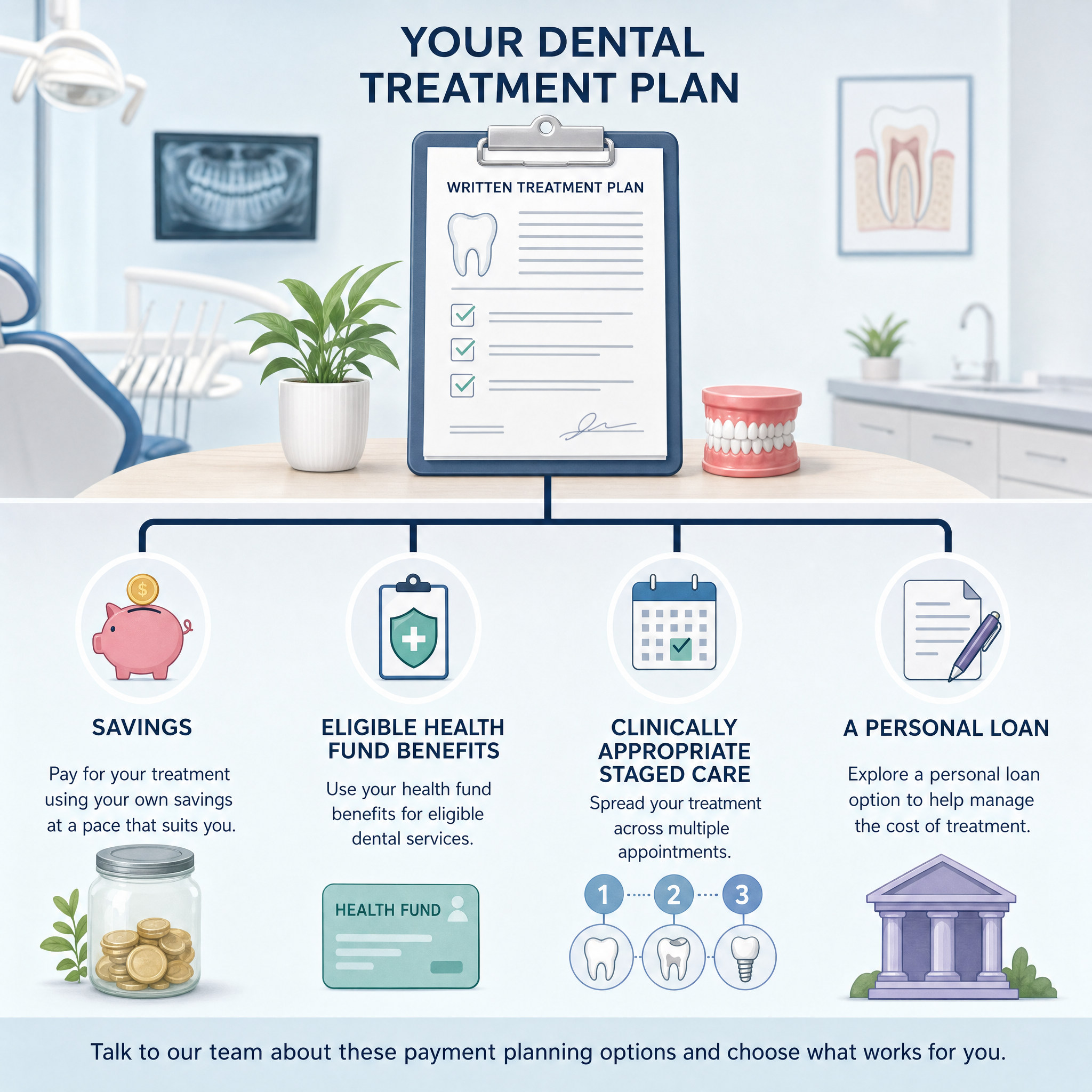
Before applying for a loan, check what you would actually need to fund. Eligible health fund benefits may reduce your out-of-pocket amount, although benefits, waiting periods, annual limits and item eligibility vary by policy.
If you’re an HBF member, review the practice’s HBF Members Plus payment information and confirm your own benefit details with HBF. Membership or provider arrangements don’t mean every service or cost will be covered.
Staged care may also be worth discussing. That means completing treatment over separate appointments or periods where the dentist considers the timing clinically appropriate. It isn’t simply a way to postpone whatever costs the most. Active infection, worsening damage or other pressing problems may need earlier attention, and only an examination can establish that.
Dental payment options: questions, possible costs and limits to check
| Payment approach | Questions to ask | Costs or limits to check |
|---|---|---|
| Savings | How much can I use without leaving myself short for ordinary expenses? | Reduced savings buffer and any time needed to rebuild it |
| Eligible health fund benefits | Which item numbers may be claimable, and what benefit estimate has the fund provided? | Waiting periods, annual limits, exclusions, gaps and policy conditions |
| Clinically appropriate staged care | Which stage comes first, and what are the consequences of waiting between stages? | Separate visit costs, possible changes in oral health and revised estimates |
| Personal loan | What will I repay in total, and what happens if my circumstances change? | Interest, fees, term, repayment timing and contract conditions |
There’s no single payment method that suits everybody. Savings avoid a credit contract but reduce the cash you keep available. Health fund benefits may lower some costs but are governed by your policy. Staging can spread appointment costs only where the clinical timing allows it. A loan may provide funds sooner, yet it creates an ongoing repayment obligation.
Compare the figures you can verify. The Australian Dental Association provides patient-facing oral health material among its Australian Dental Association resources, while questions about a particular credit product should go to the lender or an appropriately licensed financial professional.
Questions to ask before financing dental care in Armadale
Take two short lists into your conversations: one for the dental team and one for the lender. You don’t need to understand every technical term before asking. That’s the point of the questions.
Questions for your dental team
- What care is recommended now, and why?
- What could happen if I delay it?
- Which parts, if any, may be scheduled later based on my oral health?
- Are there clinically reasonable alternatives?
- What appointments and services are included in the estimate?
- Could the plan change once treatment starts?
- If it changes, how will the revised care and cost be explained before proceeding?
- What follow-up or maintenance might be needed?
The practice publishes team profiles with AHPRA registration numbers, so you can confirm who is discussing your care. Registration details identify the practitioner; they don’t replace the need to ask questions about your own diagnosis and options.
Questions for a lender
- What is the total amount I’m expected to repay?
- Is the interest rate fixed or variable?
- Which establishment, account, late or other fees apply?
- How often are repayments due?
- Can I make extra repayments, and is there a charge?
- What happens if I miss a payment?
- Would the repayments remain manageable if my income or expenses changed?
- Is any asset being used as security?
For people in Armadale and nearby Byford, Gosnells or Kelmscott, the main takeaway is straightforward: understand the dental plan first, then compare the full cost and conditions of each payment option. If you need more background before your appointment, browse more dental information from Prospect Road Dental Surgery.
FAQs about personal loans for dental work
Can I get a personal loan before receiving a dental estimate?
A lender may allow you to apply, but applying before you know the proposed treatment cost can leave you guessing about the amount. An examination and written estimate give you a clearer starting figure. You can then check possible fund benefits and ask whether any part of the care may be staged before deciding how much, if anything, to borrow.
Will the dentist arrange the loan for me?
The dental practice can explain your treatment plan and estimate. Loan applications, credit checks, approval, rates and contract conditions sit with the lender. Ask who the credit provider is and read its documents rather than assuming the dental estimate and finance contract are the same arrangement.
Is a lower weekly repayment always cheaper?
No. A lower repayment can result from extending the loan over a longer term, which may increase the interest you pay overall. Compare the total amount repayable, fees and loan length alongside the weekly or fortnightly amount.
Should I borrow extra in case the treatment changes?
Don’t assume extra treatment will be required. Ask your dentist what uncertainties exist and how any change would be assessed, explained and estimated. Borrowing more than you need increases your debt, while borrowing exactly the quoted amount may not cover an agreed change later. This is a financial decision to consider using the information available to you.
Can dental treatment be completed in stages?
Sometimes, but the answer depends on your oral health and the type of care proposed. Ask which issue needs attention first, what may wait and what the clinical consequences of waiting could be. Cost alone shouldn’t decide the order.
What if I don’t understand the loan contract?
Pause and ask the lender to explain the unclear terms, calculations and fees in writing. If you’re still unsure, seek independent financial guidance. You shouldn’t have to rely only on an advertisement or a verbal summary when taking on a repayment commitment.
How do I get an individual dental estimate?
Arrange an assessment and bring any relevant health fund information. The dental team can examine your circumstances, discuss the proposed options and prepare an estimate based on what is known at that point. You can then compare payment methods without pressure to borrow.
This article provides general information only and isn’t personal dental or financial advice. Consult a dentist for advice about your own symptoms, treatment needs and clinical circumstances, and speak with a licensed financial professional or credit provider about borrowing decisions.
 Cosmetic Dentistry
 General Dentistry
 Restorative Dentistry
 Children’s Dentistry
 Laser Dentistry
 Orthodontics